
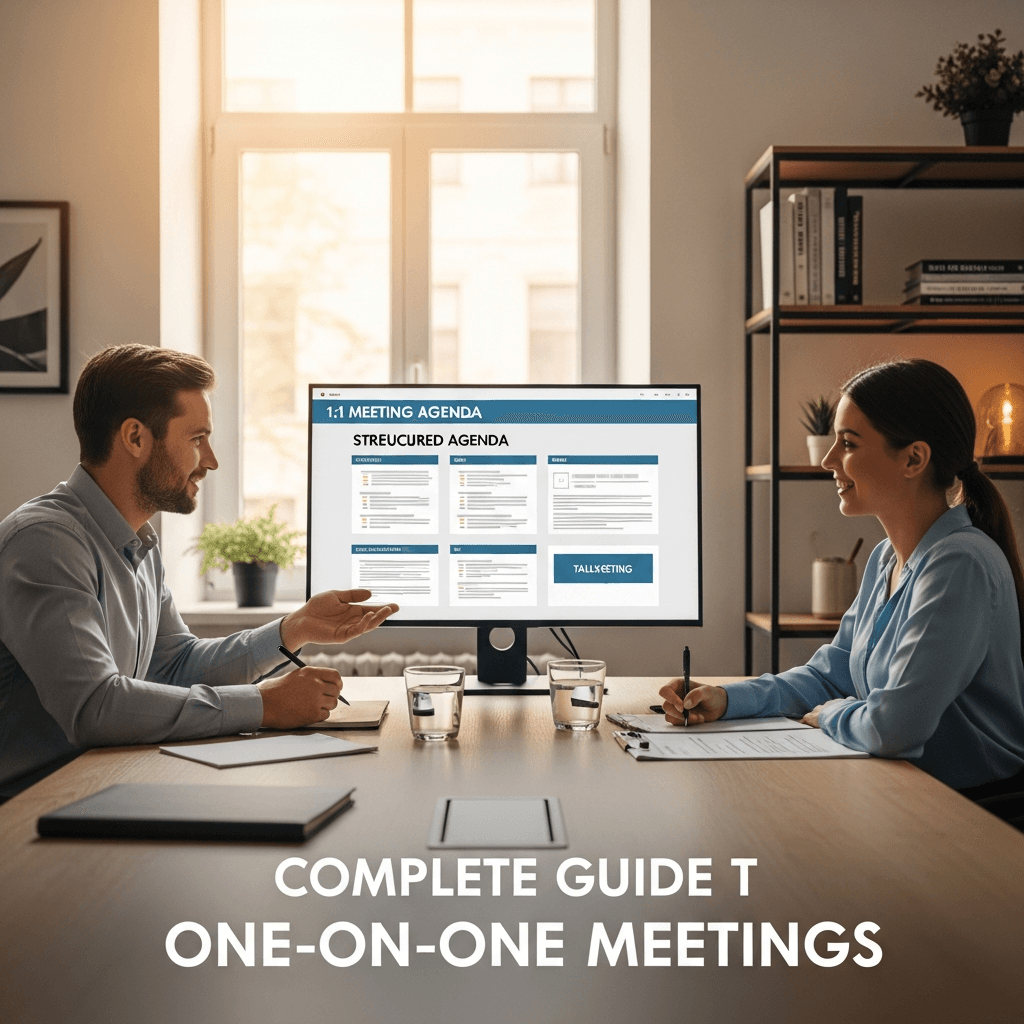
One-on-one meetings can make or break your relationship with your team - but most managers and employees don't know how to run them effectively.
A one-on-one meeting (also called a 1:1 or one-to-one) is a recurring private meeting between a manager and their direct report. Unlike team meetings or status updates, one-on-ones focus on the employee's needs, career development, and well-being. Done right, they're one of the most impactful things you can do to boost engagement and retention.
Research from Gallup shows employees with regular one-on-ones are nearly 3x more likely to be engaged at work. Companies that prioritize these meetings see up to 57% higher retention rates.
Whether you're a manager looking to improve your meetings, an employee wanting to get more value from your 1:1s, or just getting started with the practice, this guide covers everything you need.
In this guide:
- What Is a One-on-One Meeting?
- Why One-on-One Meetings Matter
- How Often Should You Have One-on-One Meetings?
- Free Agenda Template
- 50+ Meeting Questions
- Step-by-Step Guide
- Best Practices
- Common Mistakes to Avoid
- Virtual One-on-Ones
- FAQ
What Is a One-on-One Meeting?
A one-on-one meeting is a dedicated, recurring conversation between a manager and a single employee - typically one of their direct reports. These meetings are scheduled regularly (usually weekly or biweekly) to discuss progress, address challenges, exchange feedback, and build a strong working relationship.
Key Characteristics of One-on-Ones:
- Private: Just you and your manager/direct report - no one else
- Recurring: Scheduled at a consistent cadence (not ad hoc)
- Employee-focused: Primarily addresses the employee's needs, not status updates
- Two-way: Both parties contribute, share, and listen
- Relationship-building: Goes beyond work tasks to build trust
What a One-on-One Is NOT:
| One-on-One Meeting | NOT a One-on-One |
|---|---|
| Private conversation | Team meeting |
| Career-focused | Project status update |
| Employee-driven agenda | Manager-dominated lecture |
| Regular and recurring | Ad hoc or crisis-only |
| Feedback exchange | Formal performance review |
Common Aliases
You might hear one-on-one meetings called:
- 1:1 meeting (pronounced "one-on-one")
- One-to-one meeting (British English)
- 1-on-1
- Check-in meeting
- Sync meeting
- Coaching session
They all refer to the same practice: a dedicated meeting between manager and direct report.
Why One-on-One Meetings Matter
The research is clear: regular one-on-ones are one of the highest-leverage activities for managers and employees alike.
The Engagement Impact
According to Gallup, employees who have regular one-on-one meetings with their manager are:
- 3x more likely to be engaged at work
- 430% more likely to feel engaged (per Marcus Buckingham Company research)
- Significantly more likely to feel their manager cares about their development
Key Benefits
For Employees:
- Dedicated time with your manager's attention
- Safe space to discuss concerns and challenges
- Career development and growth conversations
- Clearer expectations and feedback
- Stronger relationship with leadership
For Managers:
- Deeper understanding of team dynamics
- Early detection of problems before they escalate
- Opportunity to coach and develop talent
- Better retention through demonstrated investment
- More productive teams overall
For Organizations:
- Higher employee engagement scores
- Reduced turnover (up to 57% improvement)
- Improved productivity (18% per Gallup)
- Stronger manager-employee relationships
- Better alignment on goals and priorities
The CAMPS Framework
Research from LifeLabs Learning identifies five psychological needs that drive employee engagement - all of which can be addressed in one-on-ones:
| Need | What It Means | How 1:1s Help |
|---|---|---|
| Certainty | Knowing what to expect | Clarify priorities and expectations |
| Autonomy | Control over your work | Discuss decisions and preferences |
| Meaning | Purpose in your work | Connect tasks to larger goals |
| Progress | Sense of forward movement | Review accomplishments and growth |
| Social Inclusion | Belonging to the team | Build relationship with manager |
How Often Should You Have One-on-One Meetings?
The Short Answer
Weekly one-on-ones are optimal for most manager-employee relationships.
Weekly meetings allow real-time discussion of challenges, timely feedback, and consistent connection. If weekly isn't possible, biweekly is the next best option. Monthly should be the minimum - any less frequent and you lose the benefits.
Frequency Recommendations
| Situation | Recommended Frequency | Duration |
|---|---|---|
| New employee (first 90 days) | Weekly | 45-60 min |
| Standard relationship | Weekly | 30 min |
| Experienced employee, stable work | Biweekly | 30-45 min |
| Large team (7+ reports) | Biweekly | 30 min |
| Remote employee | Weekly | 30-45 min |
| Performance improvement | Weekly | 45-60 min |
Duration Guidelines
- 30 minutes: Standard check-ins, quick problem-solving
- 45 minutes: Development discussions, feedback sessions
- 60 minutes: Career planning, complex challenges, quarterly reviews
Factors That Affect Frequency
Consider adjusting your cadence based on:
- Team size: More reports may require less frequent meetings
- Employee experience: New hires need more frequent touchpoints
- Project intensity: High-change periods may require more check-ins
- Remote vs. in-person: Remote teams often benefit from more frequent meetings
- Relationship maturity: Well-established relationships may need less time
The Key Principle
Consistency matters more than perfection. Pick a frequency you can actually maintain without canceling. A reliable biweekly meeting beats a weekly meeting that gets cancelled 50% of the time.
How to Prepare for a One-on-One Meeting
For Managers
Review previous meeting notes
- What action items were committed?
- What follow-up is needed?
- Any patterns or ongoing themes?
Check on goals and projects
- How is the employee progressing?
- Any blockers you've observed?
- Recognition opportunities?
Prepare your questions
- Don't rely on the same questions every time
- Have 2-3 prepared to start the conversation
- Leave space for the employee's agenda
Clear your head
- Put away distractions
- Create mental space for the conversation
- Enter with genuine curiosity
For Employees
Own your agenda
- Come with topics YOU want to discuss
- Don't wait for your manager to lead
- This is your time - use it
Prepare updates and questions
- What do you need help with?
- What decisions need input?
- What feedback do you want?
Think about career development
- What skills do you want to build?
- What opportunities interest you?
- Where do you see yourself growing?
Gather context
- Review your work since the last meeting
- Note accomplishments and challenges
- Think about team dynamics
One-on-One Meeting Agenda Template
Standard One-on-One Agenda
ONE-ON-ONE MEETING AGENDA
Date: [Date]
Participants: [Manager] & [Employee]

━━━━━━━━━━━━━━━━━━━━━━━━━━━━━━━━━━━━━━━━

1. CHECK-IN (5 min)
   - How are you doing personally?
   - How are you feeling about work?

2. EMPLOYEE TOPICS (15-20 min)
   - [Employee adds topics here]
   - [Employee adds topics here]
   - [Employee adds topics here]

3. MANAGER TOPICS (5-10 min)
   - [Manager adds topics here]
   - [Manager adds topics here]

4. FEEDBACK EXCHANGE (5 min)
   - What feedback do you have for me?
   - Here's something I wanted to share...

5. DEVELOPMENT & GOALS (5 min)
   - Progress on current goals
   - Growth opportunities

6. ACTION ITEMS & NEXT STEPS (5 min)

   | Action Item | Owner | Due Date |
   |-------------|-------|----------|
   |             |       |          |
   |             |       |          |

NOTES FROM TODAY'S MEETING:
[Space for meeting notes]

━━━━━━━━━━━━━━━━━━━━━━━━━━━━━━━━━━━━━━━━
Tips for Using the Agenda
- Share in advance: Both parties should add topics before the meeting
- Make it collaborative: Use a shared document both can edit
- Keep a running doc: One document per employee relationship, added to each meeting
- Prioritize ruthlessly: You won't cover everything - focus on what matters most
- Track action items: Review at the start of each meeting
One-on-One Meeting Questions
Check-In and Icebreaker Questions
Start your meeting with connection before diving into work topics.
- How are you doing today - really?
- What's been on your mind this week?
- How's life outside of work?
- What's something good that happened recently?
- How are you feeling about your workload right now?
- What's energizing you lately?
- What's draining your energy?
- On a scale of 1-10, how are you feeling about work this week?
- Is there anything weighing on you that I should know about?
- How was your weekend?
Work Progress Questions
Understand what's happening without turning into a status meeting.
- What are you most proud of since we last met?
- What's the biggest challenge you're facing right now?
- Is there anything blocking your progress?
- What would make your work easier this week?
- Are there any decisions you need help with?
- How are you feeling about your current projects?
- What's taking more time than expected?
- Is there anything you need from me to move forward?
- What's going well that we should keep doing?
- What's one thing we could improve as a team?
Feedback Questions
Create space for two-way feedback exchange.
- What feedback do you have for me?
- How could I better support you?
- Is there anything I should stop doing?
- Is there anything I should start doing?
- What do you wish I knew about how you work?
- Am I giving you enough (or too much) guidance?
- How do you prefer to receive feedback?
- Is there anything I've done recently that was helpful?
- What's one thing I could do differently as your manager?
- Do you feel like you're getting enough recognition?
Career Development Questions
Help your employees grow.
- Where do you see yourself in 2 years?
- What skills would you like to develop?
- What kind of work do you find most fulfilling?
- Are there projects or roles you'd like to explore?
- What's a stretch goal you'd like to work toward?
- Who in the company do you want to learn from?
- What's holding you back from the next level?
- How can I help with your career development?
- What training or resources would be helpful?
- If you could work on anything at this company, what would it be?
Team and Company Questions
Understand the broader context.
- How do you feel about the team dynamics?
- Is there anything happening on the team I should know about?
- Do you feel like you have the context you need?
- What do you think about our recent team/company decisions?
- Is there anyone on the team you'd like to collaborate with more?
- What would make our team more effective?
- Do you understand how your work connects to company goals?
- What's one thing our team does well?
- What's one thing our team could do better?
- Do you have suggestions for improving our processes?
Closing Questions
End with clarity and commitment.
- What are you committing to before our next meeting?
- What can I help you with before we meet again?
- Is there anything we didn't cover that you'd like to discuss next time?
- Do you feel like we're using this time effectively?
- Any final thoughts or questions?
How to Run an Effective One-on-One Meeting
Step 1: Schedule Consistently
- Set a recurring calendar invite (weekly or biweekly)
- Choose a time that works for both parties
- Protect the time - avoid canceling or rescheduling
- If you must reschedule, do it within the same week
Step 2: Create a Shared Agenda
- Use a shared document or tool
- Both parties add topics before the meeting
- Share the agenda at least 24 hours in advance
- Let the employee's topics take priority
Step 3: Start with Connection
- Begin with a genuine check-in
- Ask how they're doing - and mean it
- Spend 3-5 minutes on personal connection
- This builds psychological safety
Step 4: Let the Employee Lead
- Their topics come first
- Resist the urge to take over
- Ask "What's most important to discuss today?"
- Follow their lead on priorities
Step 5: Listen More Than You Talk
- Aim for 70% listening, 30% talking
- Ask follow-up questions
- Avoid interrupting
- Take notes to show you're engaged
Step 6: Exchange Feedback
- Make feedback a regular part of every meeting
- Give specific, actionable feedback
- Ask for feedback on your own performance
- Create safety for honest input
Step 7: Discuss Development
- Don't skip this section
- Ask about career goals regularly
- Identify growth opportunities
- Connect development to current work
Step 8: Agree on Action Items
- End with clear commitments
- Assign owners to each item
- Set realistic deadlines
- Document everything
Step 9: Follow Up
- Review action items at the start of next meeting
- Track progress over time
- Hold each other accountable
- Celebrate completed items
One-on-One Meeting Best Practices
For Managers
Do:
- Be present - close Slack, put away your phone
- Practice active listening (nod, summarize, ask follow-ups)
- Ask open-ended questions
- Make it employee-driven
- Follow through on commitments
- Keep meetings even when things are busy
- Document and remember key details
- Create psychological safety
Don't:
- Do all the talking
- Turn it into a status update
- Cancel frequently
- Multitask during the meeting
- Skip development conversations
- Only talk when there's a problem
- Make it about you
For Employees
Do:
- Come prepared with your agenda
- Be honest and direct about challenges
- Ask for what you need
- Take ownership of your development
- Follow up on action items
- Give feedback to your manager
- Use the time strategically
Don't:
- Wait for your manager to drive the conversation
- Only bring good news
- Skip preparation
- Be passive about your career
- Avoid difficult topics
- Assume your manager knows what you need
Common One-on-One Meeting Mistakes
Mistake 1: Canceling Frequently
The Problem: Frequent cancellations signal that the meeting (and the employee) isn't a priority.
The Fix: Protect your one-on-one time. If you must reschedule, do it within the same week. Never cancel - only reschedule.
Mistake 2: Making It a Status Update
The Problem: Status updates can happen asynchronously. Using 1:1 time for project updates wastes a valuable opportunity.
The Fix: Get status updates in writing before the meeting. Use the 1:1 for topics that require real conversation.
Mistake 3: Manager Doing All the Talking
The Problem: When managers dominate the conversation, employees don't get value from the meeting.
The Fix: Ask questions and actively listen. Aim for 70% listening, 30% talking.
Mistake 4: No Agenda or Structure
The Problem: Unstructured meetings drift and don't cover important topics.
The Fix: Use a shared agenda template. Both parties add topics in advance.
Mistake 5: Skipping Follow-Through
The Problem: When action items aren't tracked, trust erodes and meetings feel pointless.
The Fix: Document action items with owners and deadlines. Review at the start of each meeting.
Mistake 6: Only Focusing on Problems
The Problem: If one-on-ones only happen when there's a problem, employees dread them.
The Fix: Make one-on-ones routine. Include recognition, development, and positive topics too.
Mistake 7: Not Discussing Career Development
The Problem: Employees want to grow. Skipping development conversations leads to disengagement.
The Fix: Dedicate time in every meeting (or every few meetings) to career development.
Virtual One-on-One Meetings
Remote work has made virtual one-on-ones the norm for many teams. Here's how to make them effective.
Technology Setup
- Video on: Seeing faces builds connection (but be flexible about off days)
- Minimize distractions: Close unnecessary tabs and notifications
- Test your tech: Audio and video issues waste precious time
- Have a backup plan: Phone number in case video fails
Building Connection Remotely
- Spend extra time on personal check-ins
- Be more intentional about small talk
- Share your screen to collaborate on notes
- Consider occasional informal "virtual coffee" meetings
Time Zone Considerations
- Rotate meeting times fairly if you're in different zones
- Be mindful of early morning or late evening meetings
- Document well so async follow-up is possible
Hybrid Meeting Tips
- If one person is remote and one in-office, the in-office person should also use video
- Use collaborative documents everyone can see
- Be extra explicit about action items and next steps
One-on-One Meeting Variations
Skip-Level Meetings
A skip-level meeting is a one-on-one between an employee and their manager's manager (skipping one level in the hierarchy).
Purpose:
- Build relationships with senior leadership
- Get broader organizational perspective
- Discuss long-term career goals
- Surface issues that might not reach leadership
Frequency: Quarterly is typical
Tips:
- Come prepared with thoughtful questions
- Focus on career and organizational topics
- Share how your direct manager supports you
- Be honest but professional
New Hire One-on-Ones
First 90 Days: More frequent (weekly) and longer (45-60 min)
Focus Areas:
- Onboarding progress and questions
- Role clarity and expectations
- Relationship building
- Early feedback on both sides
- Cultural integration
Performance Improvement One-on-Ones
When an employee is struggling, one-on-ones become more critical.
Approach:
- Increase frequency (weekly or more)
- Be direct about concerns
- Document everything
- Set clear, measurable goals
- Provide support and resources
- Follow your HR process
Frequently Asked Questions
What is a one-on-one meeting?
A one-on-one meeting (also called a 1:1) is a recurring private meeting between a manager and their direct report. Unlike team meetings or status updates, one-on-ones focus on the employee's needs, career development, feedback exchange, and relationship building. Research shows employees with regular one-on-ones are nearly 3x more likely to be engaged at work.
How often should you have one-on-one meetings?
Research recommends weekly one-on-one meetings as the optimal frequency for most teams. Weekly meetings allow real-time discussion of challenges and timely feedback. For experienced employees or larger teams, biweekly works well, but monthly should be the minimum. The key is consistency - pick a frequency you can maintain without frequent cancellations.
How long should a one-on-one meeting be?
Most one-on-one meetings should be 30-60 minutes. A 30-minute meeting works well for standard check-ins and quick problem-solving. Extend to 45-60 minutes when discussing career development, major feedback, or complex challenges. If you meet less frequently (monthly), plan for a full 60 minutes to cover everything adequately.
What should be discussed in a one-on-one meeting?
Key topics for one-on-one meetings include: (1) Personal check-in and well-being, (2) Work progress and blockers, (3) Two-way feedback exchange, (4) Career development and goals, (5) Recognition and wins, and (6) Action items and next steps. The employee should drive most of the agenda, with the manager providing support and guidance.
Should one-on-one meetings be manager-led or employee-led?
Best practice is for one-on-one meetings to be employee-led. The employee should prepare the agenda, bring topics they want to discuss, and drive the conversation. However, the manager shares responsibility for ensuring the meeting happens consistently and covering important topics like feedback and development. Both parties should contribute to making meetings valuable.
What questions should I ask in a one-on-one meeting?
Effective one-on-one questions include: "How are you feeling about work lately?", "What's the biggest challenge you're facing?", "What feedback do you have for me?", "What skills would you like to develop?", and "What can I do to better support you?" Use open-ended questions that encourage discussion rather than yes/no answers.
What if my manager keeps canceling one-on-ones?
If your manager frequently cancels one-on-ones, address it directly but professionally. Request a conversation about the importance of regular meetings. Suggest a different time that might work better. Come prepared with a brief agenda to demonstrate value. If cancellations continue, consider escalating to HR or treat it as a red flag about management culture.
What is a skip-level meeting?
A skip-level meeting is a one-on-one between an employee and their manager's manager (skipping one level in the hierarchy). These typically happen quarterly and focus on career goals, organizational feedback, and building relationships with senior leadership. They provide perspective beyond your immediate team and can be valuable for career development and visibility.
The Bottom Line
One-on-one meetings are one of the most valuable investments you can make in your work relationships - whether you're a manager or an employee.
The keys to success:
- Be consistent: Schedule regularly and protect the time
- Be prepared: Both parties should come with topics
- Be present: Give your full attention
- Be honest: Create safety for real conversations
- Be action-oriented: End with clear commitments
Start with the basics: a simple agenda, a few good questions, and a commitment to showing up consistently. As you build the habit, you can refine your approach.
Ready to start? Download our free one-on-one meeting agenda template and question checklist to get started today.